

Mass readings for the 18th Sunday in Ordinary Time:
Isaiah 55.1-3 Psalm 145.8-9, 15-18 Romans 8.35, 37-39 Matthew 14.13-21
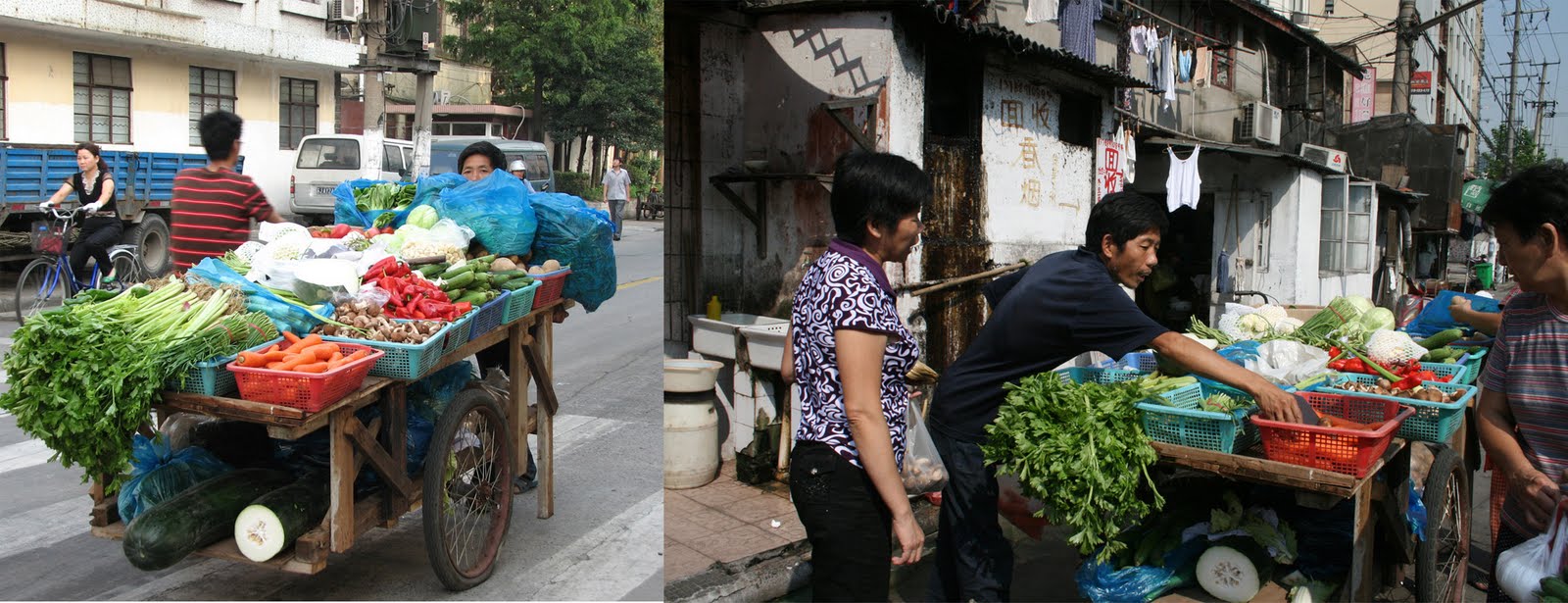
The passage from the prophet Isaiah we heard at the outset of the Liturgy of the Word has long been recognized as the prophet evoking for his listeners and readers the idea of the street peddler – the man who made his living pushing a cart through the streets of a city, or the villages surrounding an urban center, shouting out his goods, announcing his prices. We don’t encounter this figure much anymore in our daily lives – there is still the ice cream truck that cruises through the neighborhood in summer months playing its chimes, the knife-sharpener who rings his bell. But until not that long ago, in historical terms, the man pushing a cart down our streets and conducting his business on our front steps was pretty common. In fact, not long ago, it was mentioned that one of our parishioners did just this as a boy, right here in Dundas: faithful member of our parish, John Picone. As a youth he pushed a cart load of produce through the streets, hawking tomatoes and zucchini; but we need to remember John’s over a hundred years old!
Anyway, we hear Isaiah in the guise of the peddler, delivering something in the vein of a commercial message. Yet we quickly discern, he’s not trying to sell us something, but rather is making another kind of offer. So, where we’re accustomed to a t.v. or radio pitch like, “Why spend more when you can save big at Acme Giant Shopping Outlet?” or “Why spend hours when this new labor saving device can do the same job in minutes?” instead we hear, “Why do you spend your money for that which is not bread, and your labor for that which does not satisfy?”
It did occur to me that we can get something of the flavour of it when we go to a professional baseball game. These still have vendors walking through the stands shouting what they have to sell, you know: “peanuts, popcorn, cracker jacks” and “Beer! Ice cold beer!”
So, listen to this passage, and try to imagine, as incongruous as it is, the vendor in the bleachers, and he’s shouting, “Salvation, get your Salvation here… Reconciliation, Redemption, Resurrection!”
That likely strikes us as ridiculous, and it’s more than probable that was the reaction of the first people to hear this from Isaiah. Why is he talking like this?
Here God through his prophet is using the familiar and, in some way, the personal, to reach people. This is not the usual prophetic voice, the sort that shouts lamentations, chastises the rulers and the people for their sinfulness, announces judgment, etc. It’s a message and a manner of communication rooted in this material world.
However, I fear that because of the technology we have now, this passage isn’t as evocative for us. We can order what we want or need on our phones. We don’t shop, buy and sell in person as routinely as we once did. We know that retail stores are suffering for the lack of foot traffic; people don’t go to the shopping malls as they once did and interact with sales people; they don’t watch television or listen to radio with commercial messages as much anymore – the most common advertising we encounter is on the internet, on our phones when we access a site, and usually the sound is off. So, the street peddler who sells directly to people, that experience of hearing him, and then encountering him has been removed from our lives.
In the ancient world we had to be attuned to our environment, listening for the street vendors in hopes they may have what we were looking for; and if they do, we encountered a living, breathing person with whom we may find ourselves haggling with over price, but often also sharing news and having a broader social interaction.
It’s the flesh and blood of it, the realness of it all (as opposed to the virtual), that’s important to catch here. Isaiah is asserting that the call of God to us is not something that only occurs within the confines of the Temple, in a particularly “biblical” style of language, or in the silence of our personal prayer, but his Spirit is in the world, moving through our streets. Even further, we can see how the artificial world of cyberspace, the internet, as human creation, alienates us, not just from each other, but from God.
So, when we come to consider the feeding miracles of Jesus, we can frame our understanding in similar terms.
For in the crisis that follows the execution of John the Baptist, Jesus does not take up his “prophetic” mantle and continue in the same vein of prophetic condemnation of the powerful. Rather, Jesus continues as he had before, teaching, preaching the kingdom of God, but then does this: he feeds people; in impromptu and spectacular fashion, hosts an outdoor supper! And that becomes a time and place of divine encounter.
Where is God in that famous meal had among 5000 and more people? Obviously, in the person of Jesus who presides at, and provides for, that feast. And its instructive to us that there is something very personal about that encounter. Now, in this instance, we don’t see a street vendor unaccountably, but wonderfully, offering the bread of life, but Jesus, through his Apostles and disciples, making this miraculous meal possible. And people, the thousands who were there, responding to that. At first, being satisfied in their immediate needs were met. And those needs, I daresay, go beyond satisfying hunger, because eating together in that society was considered a fairly intimate act, a sign of comradeship, an instance really of the divine presence within the domestic practice of feeding oneself and others – God has provided, and those gathered around the stew pot, the platter heaped with fish, the bowl of bread, recognize this with a prayer of thanks, and so together are bound in a common confession that God is the giver of every good gift, that there is a God, he is in his heaven, and we are blessed.
And from that comes a further bounty. In the story of the miracle, that is seen in the fact of the leftovers gathered up exceeding the quantity of food that was first offered for the supper.
Today, when we have these moments of giving and receiving hospitality, of gathering not just as a little atomic family unit, but with other families, other people, and so experience a shared sense of God as the host and ultimately, the provider of the meal, something more comes of that too.
Now, when we come together at mass, we are ritually doing this. And I know that indeed satisfies a great many people who understand, and so, engage in the mass so as to receive the full measure of grace God affords through the celebration of the Eucharist. But for a lot of people, this mystery is one that they gain only gradually, haltingly, but this progress into the mystery of God’s love expressed in the mass, well, it can begin in the hospitality and fellowship we offer outside our worship. And so, we need to remember that among our duties that come from the great mandate to baptize, to teach, and preach in the name of the Father, Son, and Holy Spirit, the offering of hospitality and fellowship is integral to our mission.
This coming pastoral year, which really begins about mid-September, the parish will be continuing to offer, as it did this past year, hospitality (after the Sunday masses, for example), and fellowship (in the different events of worship, community meals, fun nights, etc.), but some new initiatives as well. It is my prayer that we engage in these, not out of sense of obligation, but in joyous recognition that this is where the kingdom of God is found. Conversely, I also pray that we not pass up the opportunity to gather beyond our time of sacramental celebration because of the mistaken belief it is only secondary to the faith.
For all this is part and parcel of the good things of God. And as those who ate the bread and fish came then to know Jesus, not long after would they know him more profoundly as the Christ who nourishes them with his very body and blood.
So, in all we do in obedience to our Lord and Saviour, there is to be found piety and catechesis, devotion as well as evangelization, fellowship but also the profound sacramental bond in Christ. And in this, we cannot ever be separated from the love of God.
Amen.