Mass readings for the 33rd Sunday in Ordinary Time:
Malachi 4.1-2 Psalm 98.5-9 2 Thessalonians 3.7-12 Luke 21.5-19
Through the grim warnings of coming judgment, of things coming to an end (but not “the end”) we hear today our Lord warning us not be distracted or deceived by the news and rumours that will come to us of war, famine, plague, all kind of disaster; to be cautious in reading the signs and portents of doom; to not be led astray by those who offer to be our saviour, acting in his name, yet are not of Christ at all.
The message is “be ready.” That readiness is not only for a catastrophic event, but for the trials, the testing that will come beforehand: persecutions and betrayals. It’s all grim stuff and one wonders how this can be taken as encouraging, but it is if you think about it: despite all that may come, “not a hair on your head will perish.”
Christians have been set free by the truth of Christ, and so live with a sense of fundamental optimism. That is, God wins in the end; justice, love, truth will be victorious. We just have to endure until we get to that ending! The most common test of our endurance is the discouraging news of the world – that we see so much sin, corruption, perfidy, dishonesty at work, but also the consequences of these in the tragedies of war, poverty, disease, civil strife, the loss of social cohesion. This can lead to despair; that is a sin against the 1st commandment to worship God and to serve him alone – it’s a descent into ourselves and away from him when we should aspire to holiness and set our sights on heaven.
The too common practice of so many is to indulge in things like “doom-scrolling” on the internet, or obsessive watching of news as cable and internet channels hype every story beyond reason, promising constant updates to keep us watching. These are the devotions of corrupted minds – knowing the latest news while ignoring the higher truth of our lives is to be taken into spiritual captivity. But in more practical terms, being absorbed by the latest details we often fail to see the big picture, to set current events in their proper context, to see the reality of things, but most of all to forget that God is in charge. Do we ask of the news and opinion we get, what does this have to do with justice, truth, and love of God and neighbour? If nothing, then it should be treated as such.
Now, we could blame the media for all this. But I think we need to be a little more self-critical as an audience for all that it offers. A Canadian journalist covering federal politics recently defended himself over criticism that the press was too easily, and for too long, distracted by minor but sensational stories involving backbench M.P.s, and so, failing to cover the very important federal budget. He said he wrote stories on all these subjects, and quite a few about the budget, but when he looked at how many ‘clicks’ his budget stories got compared the ones about a government M.P. posting an embarrassing video and an opposition member crossing the floor, it was clear what people were interested in: the stories of betrayal, intrigue, personal insults and argument and not what the budget proposed to do in spending billions of dollars. Well, to be honest, stories about fiscal management can be dry, boring, and difficult to understand – I know from experience they are harder to write. However, a dust up between two people, we can understand, and so are drawn to that kind of story. As a society, we need to do better in the face of the temptation to focus on what is in relative terms trivial, especially when it means neglect of what is important.
As I’ve mentioned before, having studied journalism and public communication at one stage in my life, been a practitioner on both sides of the media machine: the reporter and the public relations professional – the truth is that all those things that distort and deceive, that lead to deficiencies in the quality and quantity of good information and analysis, they are always there. In the past we assumed that both the sources of information (government, industry, etc.) and the reporters and editors and pundits, were basically on our side. So, we trusted that despite the flaws and foibles of the media, we were served well enough. But of late there is growing suspicion about those who provide us with information. There have been recurring scandals over the manipulations and deceptions in reporting through selective editing, suppression of information, exclusion of legitimate points of view, and so on. The suspicion is growing that with the traditional media, as with other institutions, they no longer serve us, but they serve someone else.
Now that can lead us into speculating about conspiracies, but I think that is a little too cynical. What we’re really experiencing is the breakdown of community, and at its root is the very thing I spoke of at the outset: the failure to keep the first commandment, to keep God in our lives as individuals, but even more importantly in our community. If the gatekeepers of information have lost their moral bearings, and so, give their allegiance (consciously or not) to principles other than those of a Christian society, well, that accounts for a lot.
This is the consequence of adopting ideology and abandoning faith. Liberalism and socialism, the ideologies that alternate in dominance in the public sphere are the perspectives we get when looking to be informed, and they cannot guide us out of our troubles. The Church has warned about this for close to two hundred years, from the very emergence of these political philosophies that both exclude God from discussion.
But how could that be the reason for our present sense of crisis? Things have only gotten bad so very recently. Well, the moral and intellectual bankruptcy we see all around us, in our political life, but also in our popular culture, happened much as financial bankruptcy does: at first gradually, then all of a sudden. Now this kind of collapse has happened before in modern times (the World Wars, the Great Depression, etc.), but in those instances there was enough of the Christian foundation left so that we could rebuild quickly.
But as the essayist Patrick Keeney wrote recently, the general crisis we find ourselves in now stems from,
“… a forgetfulness of fundamental principles — losing sight of moral development, purpose, and humility.”
He says we have lost an ultimate and shared goal. And that sadly leaves us falling back upon individual interests – we no longer ask if something is good, but if its “good” for me. And if a national budget or a local community initiative asks me to make sacrifices, to pay more taxes, and I don’t see how I personally and immediately gain anything – well, then I’m moving to Arizona, I’m retiring early to Portugal; if I’m younger, I’ll move wherever I can find a better deal. We know from polling in Canada, the younger the adult, the more prevalent that attitude is.
And when we look at that from a theological perspective, we see a lack of love for neighbour, perhaps an indifference to justice as we abandon those adversely affected by bad public policy, and an abandonment of truth as an absolute value as we disengage from community life and civic discussions. Of course, some of that withdrawal has not been our choice. Christianity is excluded from the public sphere, and the discussions and debates, lacking common ground, are less about what is good for all of us, and more about political maneuvering, winning allies, gaining power, and then, eliminating enemies.
And that is why, of this system we’ve built over the past several generations, nothing will be left of it when it at last meets its end; what is built by humanity apart from God’s guidance will eventually fail.
There is no running from this. Last week, in speaking of the Dedication of St. John Lateran, I said that the old basilica had seen a lot of history, and had witnessed the rise and fall of empires and kingdoms, but also suffered the falls as the Church kept solidarity with the people, and held them together so that whatever may come, the foundation of Christ would be there to rebuild on.
And that is our task here, our work. To keep this place standing, and ready. To be ready to help put back together what has been broken, to reorder what has degenerated into chaos, and reconcile the prodigals as they return.
I hope that makes sense of the efforts of our parish to have these lunches, and brunches, movie nights, musical concerts, Christmas markets, and parish suppers; to raise money to retire our debts, to keep the place in good repair, to keep all this for the sake of the larger community that surely needs it now, but I believe will even more in the future.
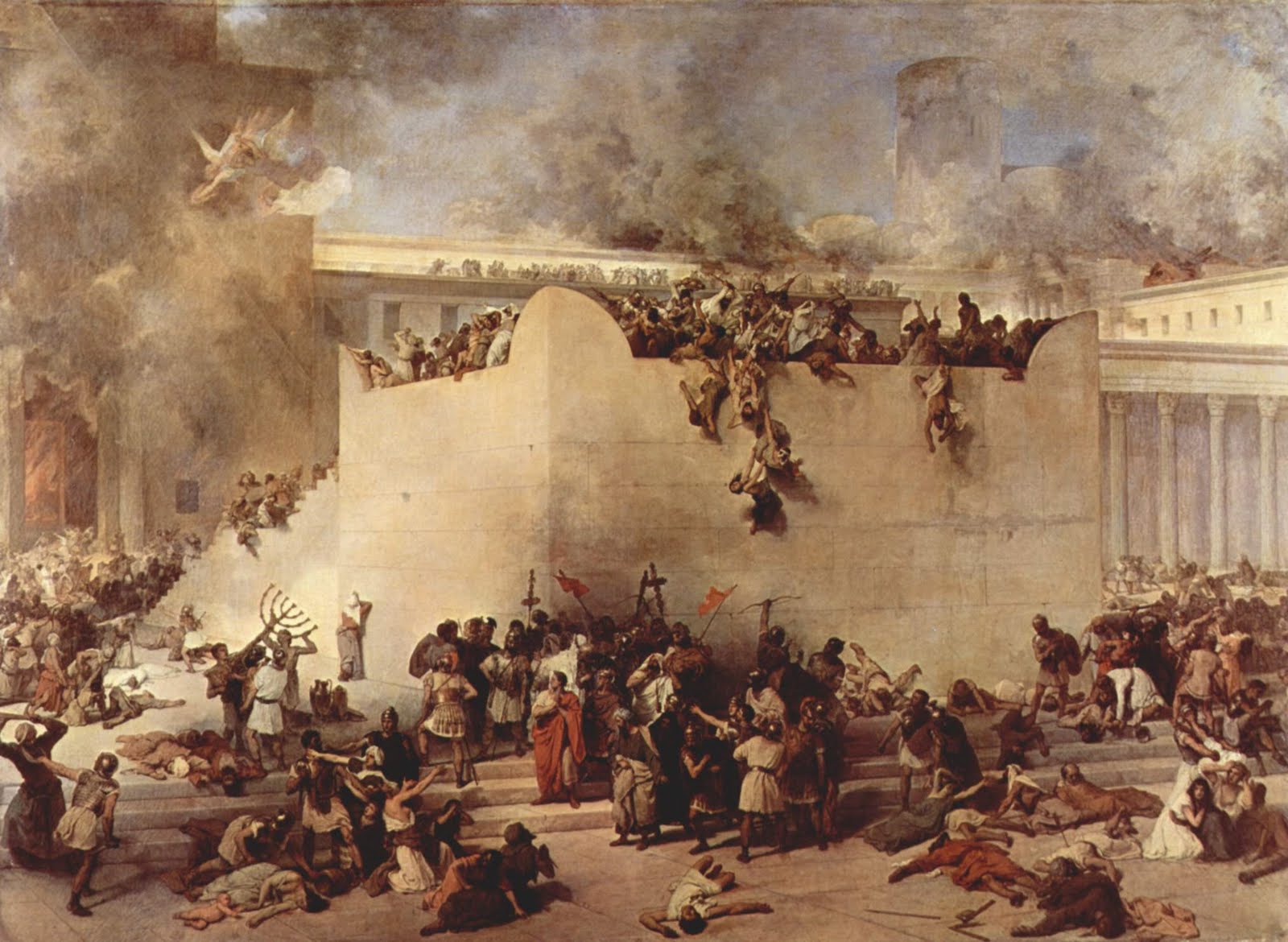
There will continue to be these minor catastrophes, big enough for those who live through them, but they aren’t the final day of judgement. In our gospel today, Jesus predicts the fall of the Temple, and that nothing of it or the society that built it will remain; and he is proven right. But something new, exciting, and of God comes to take its place: the Church; you and I, and all the faithful down through the centuries and until the end of this age. When things come to an end in this latest chapter of history, we will nonetheless still be here:
For you who revere God’s name, the sun will rise again; and we will rise again as the Church, as the body of Christ, as the keepers of this place, as the guardians of the gospel, as those who celebrate the sacraments, as those who worship and serve God.
Amen.